Why Technique Can’t Save Us
Why the Whole-Person Way Is the Only Path Toward True Healing
C. S. Lewis once made an observation so prophetic it feels like he was reading the twenty-first century from across time. He wrote that the wise men of old sought to conform the soul to reality, while both magic and applied science try to subdue reality to human desire. The ancient answer to the human problem was knowledge, self-discipline, and virtue. The modern answer is technique. He warns:
“There is something which unites magic and applied science while separating both from the wisdom of earlier ages. For the wise men of old the cardinal problem had been how to conform the soul to reality, and the solution had been knowledge, self-discipline, and virtue. For magic and applied science alike the problem is how to subdue reality to the wishes of men: the solution is a technique; (...)
But you cannot go on explaining away’ for ever: you will find that you have explained explanation itself away. You cannot go on seeing through things for ever. The whole point of seeing through something is to see something through it. It is good that the window should be transparent, because the street or garden beyond it is opaque. How if you saw through the garden too? It is no use trying to see through’ first principles. If you see through everything, then everything is transparent. But a wholly transparent world is an invisible world. To ‘see through’ all things is the same as not to see.”
”
Lewis named the crisis we are living in
Modern science is not failing because it lacks data. It fails because it lacks direction. It operates under the assumption that everything can be solved by technique: better labs, better scans, better psychology models, better algorithms, better hacks. It keeps looking “through” the human person, past the layers of soul and mystery and interiority, until nothing meaningful remains. Everything becomes a mechanism to optimize or a problem to manage.
Lewis warns about a culture that prides itself on “seeing through” every mystery:
“It’s just hormones.”
“It’s trauma.”
“It’s neurotransmitters.”
“It’s childhood conditioning.”
“It’s somatics.”
“It’s attachment style.”
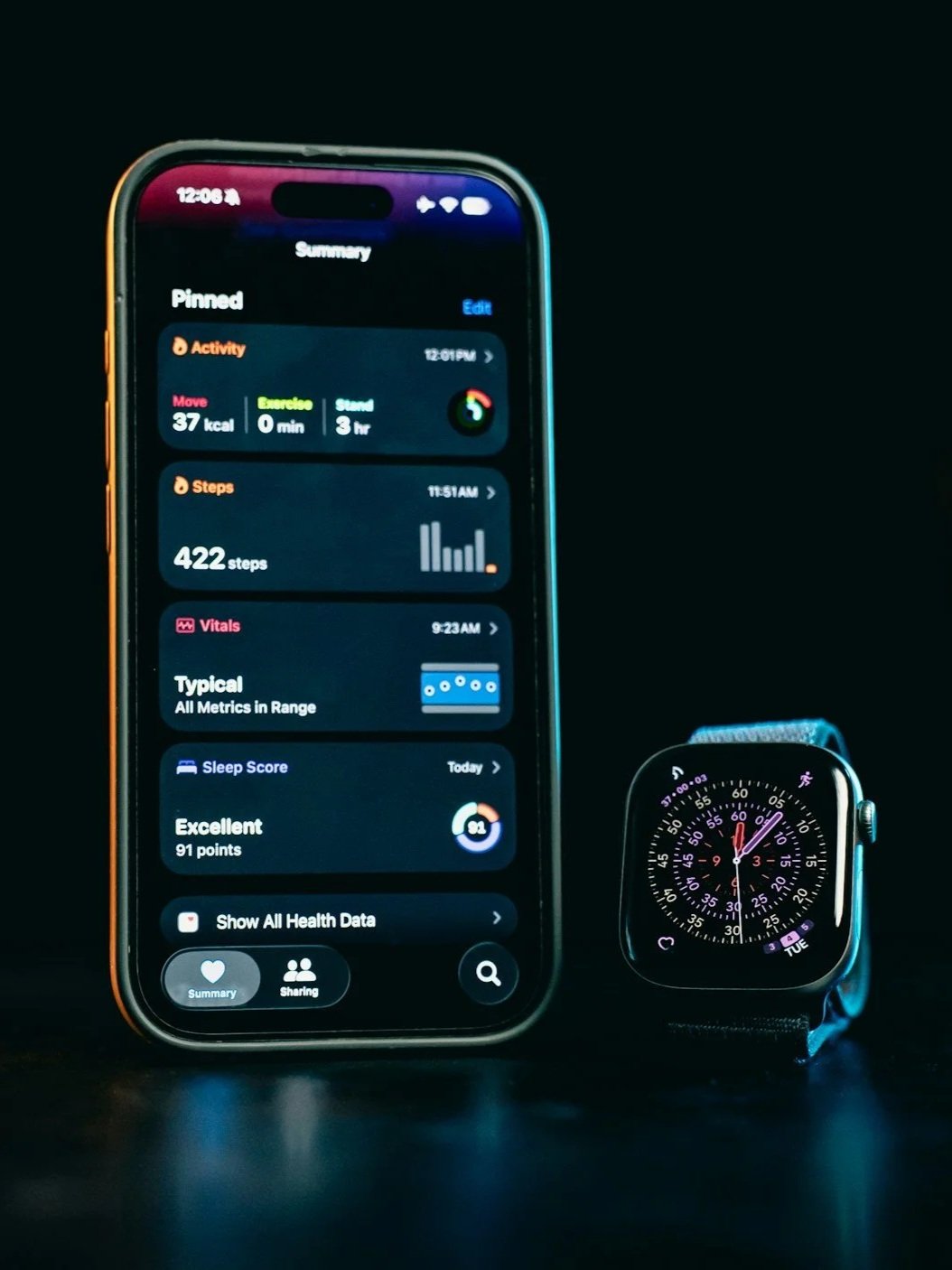
This is why people do not feel better, even with all the advancements. We treat the body like hardware, the brain like software, and the soul like outdated myth. We reduce suffering to systems, burnout to neurotransmitters, fatigue to hormones, identity to personality frameworks, and spirituality to nervous-system regulation. We have become a culture of analysers instead of perceivers. We dissect instead of discern. And in the name of seeing clearly, we have become blind.
People are left exhausted, not because they lack tools, but because they lack meaning. They’ve been handed techniques instead of truth, management strategies instead of wisdom, data instead of direction, and coping skills instead of conversion. You can track everything: steps, sleep cycles, macros, mood, heart rate, menstrual phases, and still feel hollow inside. You can optimize your life and still not live it.
Lewis saw it clearly: when you keep “seeing through” everything, you end up reducing, dissecting, and explaining away. You might eventually lose the ability to see what is actually there. You lose the ability to perceive Reality.
This is why so many people feel hollow, even when all their “metrics” look fine. This is why so many Christian leaders collapse inwardly while outwardly performing well and why burnout persists even after supplements, apps, fitness trackers, therapy, and more therapy.
Health is Harmony
Earlier ages, including Hildegard’s, saw things differently. They understood that health was not a mechanical condition but a harmony. They believed that the body and soul reflect one another, that virtue strengthens physiology, that disorder in one realm creates disorder in the other, and that healing requires aligning the whole person with God and creation. Hildegard studied herbs and humors and digestion, but always within a cosmic and spiritual vision. She did not separate the physical from the meaningful. She saw no tension between treating the liver and examining the conscience, between gut health and virtue, between sunlight and the Holy Spirit.

The modern mind can barely comprehend this integration because it stands on the assumption that only the measurable is real. But the measurable is only the window. The real world is the garden beyond it. Lewis warns us not to stare at the glass so long that we forget the garden.
This is why the whole-person approach has become not a luxury but a necessity. People are starving for a worldview that restores meaning to their bodies, dignity to their emotions, purpose to their suffering, order to their thoughts, rhythm to their days, clarity to their desires, and holiness to their healing. They need a way to live that acknowledges they are not machines but mysteries, complex, interconnected, and spiritually charged.
A whole-person approach does not reject science; it rescues science from reductionism. It does not dismiss technique; it puts technique back in its rightful place. It does not idolize data; it interprets data in the context of a human soul that longs for God. It does not offer escapism; it offers integration. It does not explain away suffering; it teaches how suffering becomes redemptive when united with Reality Himself.
People need more than protocols. They need wisdom. They need more than regulation. They need restoration. They need more than wellness. They need holiness. They need the ancient conviction that healing is not the art of bending life to our desires but the obedience of bending our desires to truth.
In the end, Lewis invites us to stop “seeing through” everything and finally, simply, see. To recognize the human person not as a transparent object to manipulate but as a luminous whole to cherish, tend, and transform. To recover a vision wide enough to hold science and spirit, metabolism and meaning, data and dignity, remedies and repentance because all of these belong to one integrated life under God.
That is the only path where modern people will actually heal. That is the path Hildegard walked. And it is the path you are inviting people back into: not a new technique, but an old wisdom rediscovered.
“Harmony was a gift to me from Father God, coming at a time when I needed to learn how to de-stress. Not only did Iwona share an integrative approach to health and well being through St. Hildegard blended with modern science and medicine, but through her the Holy Spirit answered questions that I didn’t even know how to articulate. My big take-away is a change of attitude from fear to trust and that beats stress all to pieces.”