Why Compunction Keeps the Mind Sane
Conscience, Deception, and the Cost of Absolving Desire
One of the most destabilizing assumptions of modern spirituality that got into Christian sphere is the belief that guilt and moral discomfort are signs of pathology. We are told that a healthy person should feel affirmed, validated, and unburdened by any inner resistance. But the Catholic tradition makes a far more demanding and realistic claim: when compunction disappears, sanity leaves with it. Not because God wants us miserable and shamed but because a conscience that can no longer trouble us can no longer protect us.
The Church has never taught that moral pain is an end in itself. What she has taught quietly, consistently, and against every age’s illusions is that compunction is a form of sanity, clarity, fear of God in action. It is the intellect recognizing disorder and refusing to baptize it as identity, call to freedom or destiny. When compunction is removed, imagination takes over. And imagination, unguided by truth, does not liberate but it deceives.
Compunction, not emotional self-harm
““Whoever knows the weight of his sins is greater than the one who raises the dead through his prayer.
Whoever groans for one hour over his own soul is greater than the one who benefits the whole world.
Whoever has been granted to see himself is greater than the one who has been granted to see angels.
To the one who has come to know himself, the knowledge of all things is given.
For the knowledge of oneself is the fullness of the knowledge of all things.”
The Catholic tradition does not confuse compunction with shame or self-loathing. St. Augustine of Hippo describes compunction as the painful but necessary awakening that precedes healing. His Confessions are not a therapeutic journey toward self-affirmation, but toward truth about himself, truth that wounds before it heals. But the pain that burdens so many, leads them often to chose their unbridled desires of their unleashed hearts.
Augustine understood that when moral discomfort is silenced, the soul does not become peaceful; it becomes restless and inventive, endlessly justifying what it already desires. The struggle is real. The cost is enormous. Some will leave their families to feed their wounded, stubborn or sick hearts. Some will leave the faith to satisfy their longings for life freed from any moral boundaries. Some will leave jobs and circles of friends to seek self and remove everything that does not serve them. Some will wrap it up in a language that will still sound fine for the crowd but it gives an opening to another, parallel lifestyle, which leads to nothingness. Broken families, betrayed spouses and kids, bankruptcies, piles of ashes and fragmented incoherent worldviews that superficially connect to spirituality, all in the name of finding the real call and finding self-fulfillment. That it, resolving their pain and/or pride.
Compunction is not emotional excess; it is heart’s-connected-to-God feedback. It signals that reason is still functioning. Remove it, and the intellect quietly abdicates its role as judge. What follows is not freedom but rationalization. The heart can not function without connecting to something or someone. It has to be anchored and the road to ego-worship is paved with with the refusal to be corrected (hello, Lucifer, the shining one).
The heart cannot remain neutral. If it is not anchored in God, it will anchor itself elsewhere, most often in the self. When compunction is dismissed, the heart does not become autonomous; it becomes unanchored, drifting until it fastens itself to whatever promises relief, coherence, or affirmation. This is how ego-worship quietly replaces worship of God. That’s how people start to feel that they are gods of their own lives. The road to ego-worship is paved with unexamined desires, protected by narratives of authenticity, freedom and necessity (what are you needs). Reason, having abdicated its judicial role, is reduced to a PR department for the heart, mostly explaining, justifying, and defending impulses which it can no longer evaluate and judge rightly. Conscience is rebranded as “being true to oneself,” and any inner resistance is diagnosed as harm rather than insight. But a heart that answers only to itself does not become free; it becomes fragile and defensive. It must constantly reinforce its dissent, and curate and invent reality to avoid discomfort. Compunction would interrupt this spiral - it would re-anchor the heart in truth but without it, the self becomes both altar and the heart is sacrificed on it.
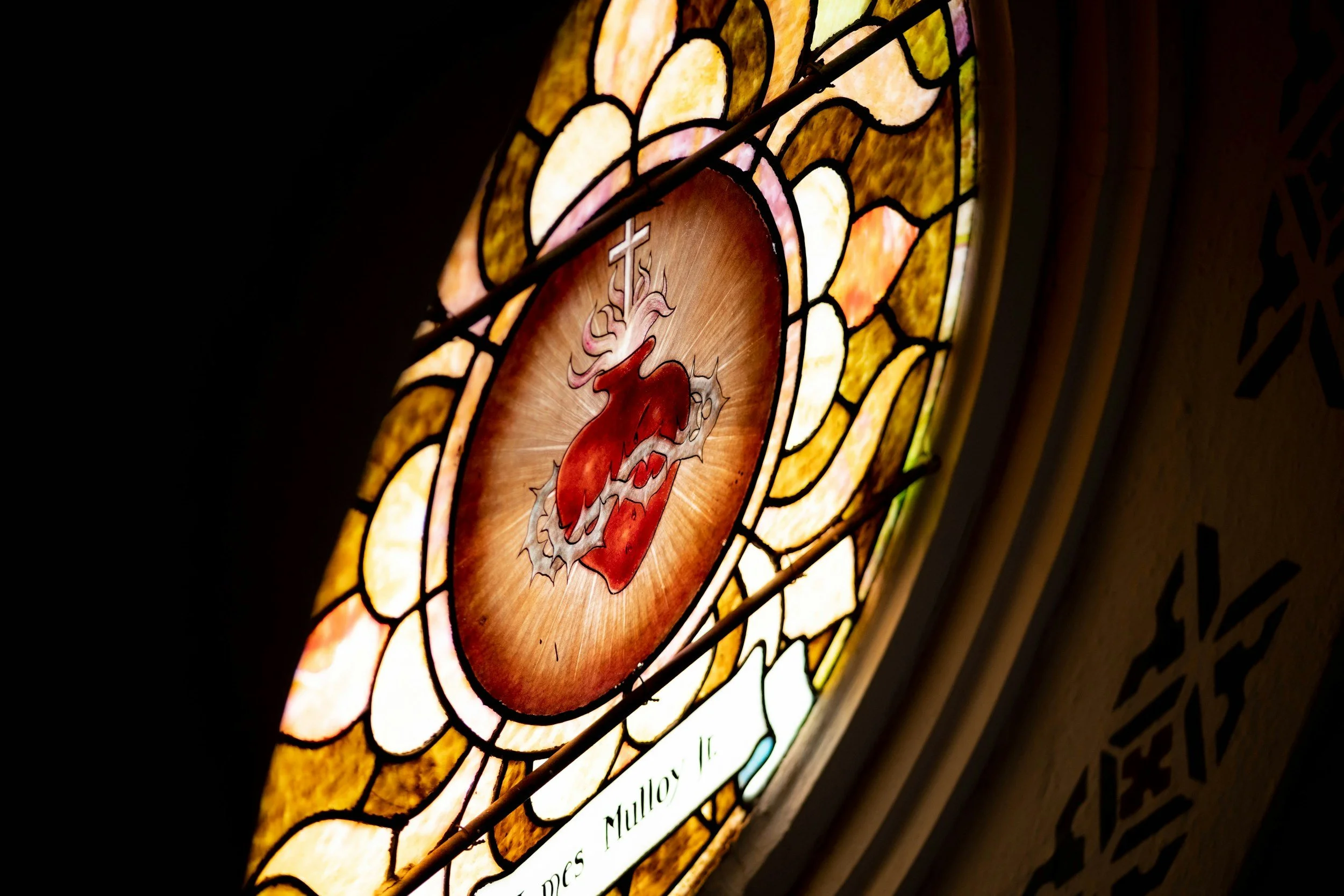
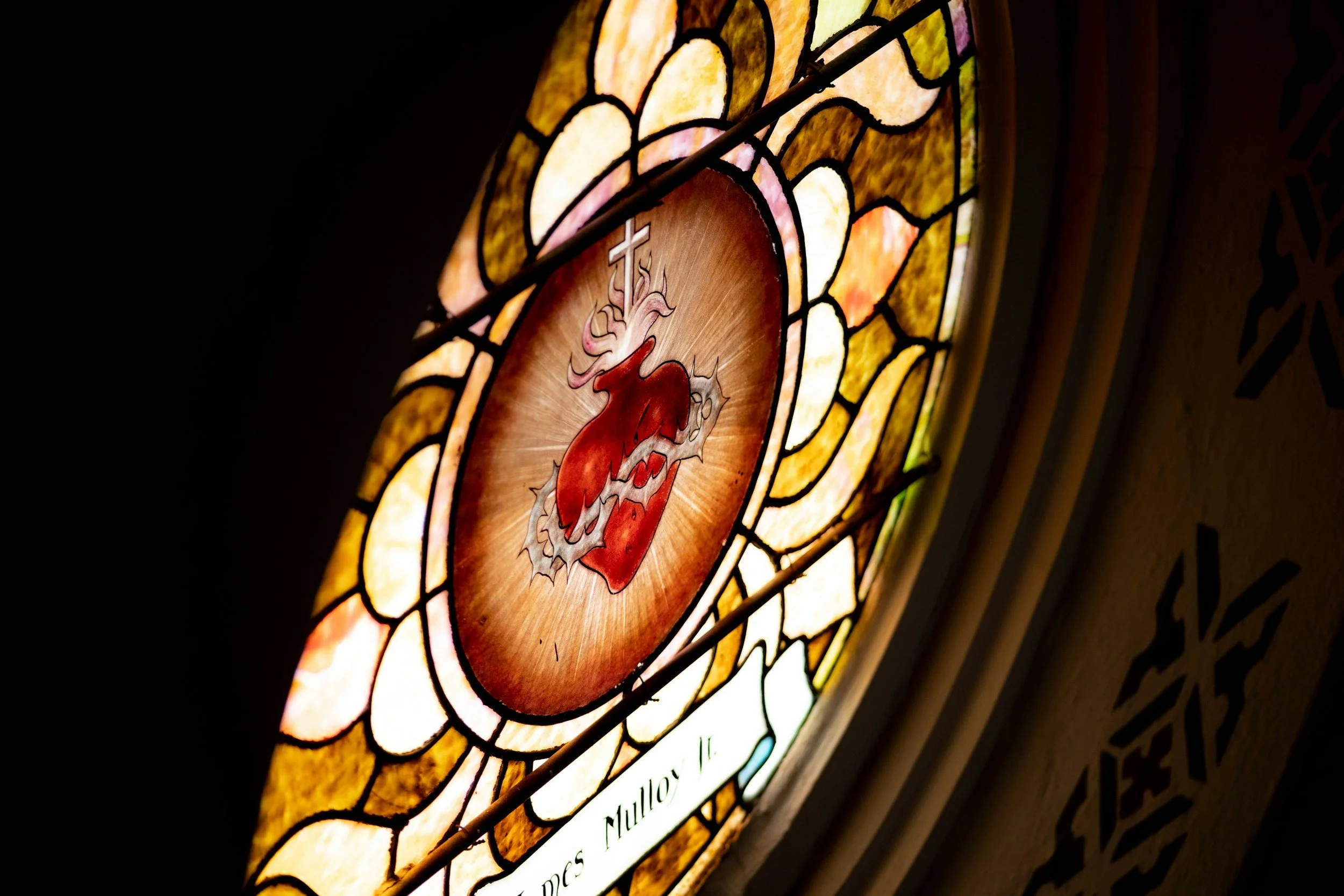
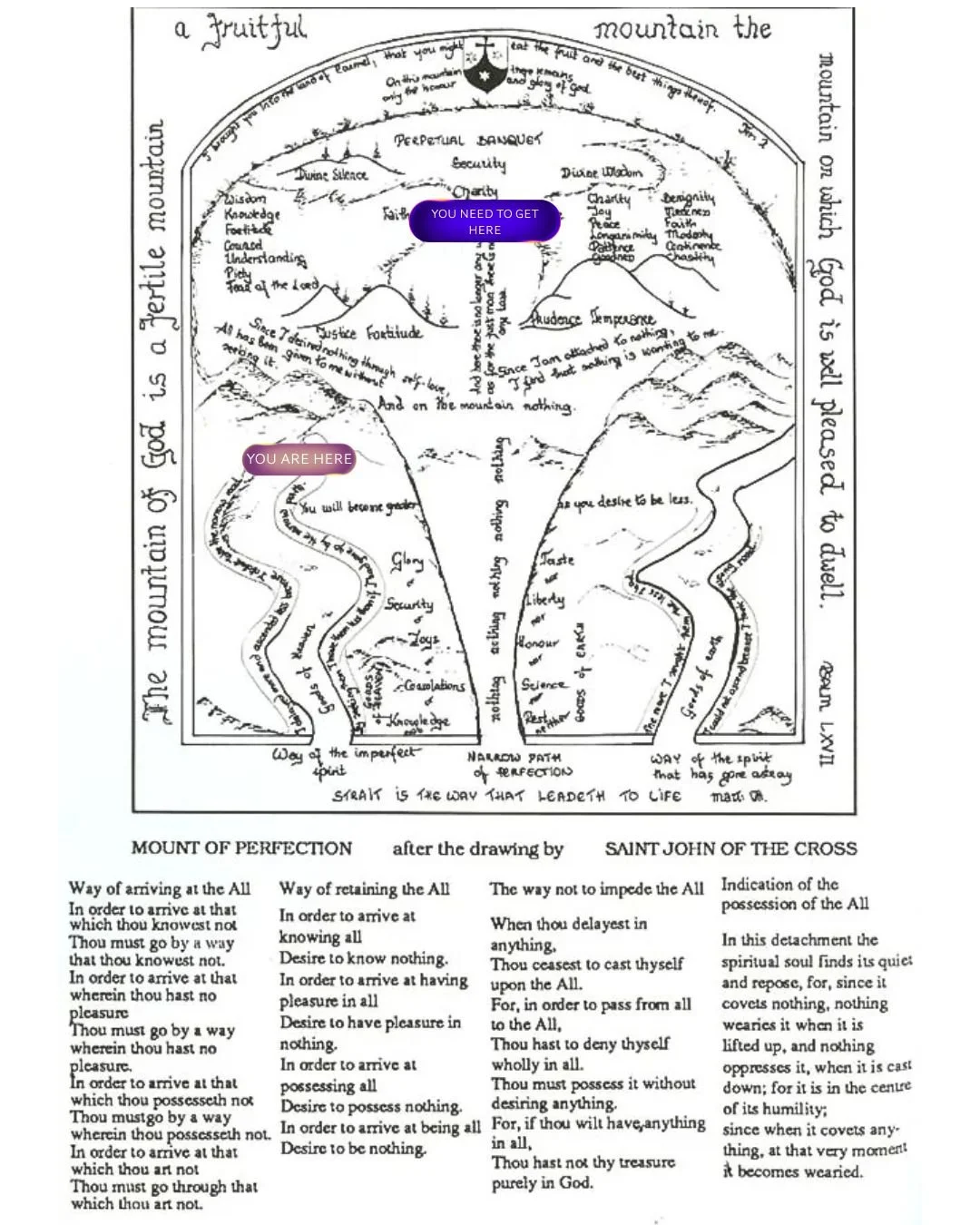
So the heart must be pierced before it can be healed. Compunction reseals the heart to God, restores the intellect’s authority, empowers will to see the end good and reorders desires toward true love. Only then can desire be purified rather than obeyed, imagination disciplined rather than enthroned, and freedom grounded in reality rather than illusion. We need to bring the heart to Calvary and let it be pierced with the love of the Father before it will swell into all consuming unbridled passion. The spiritual mortal sins, spiritual pride, spiritual envy, wrath, sloth, spiritual gluttony, greed and sloth - all of it must be brought to nada (nothing - St. John of the Cross). The path of truth has to be chosen above the path of gifts, charisms, fulfillment and all spiritualized but worldly promises. Tough? Welcome to Christianity 102.
When imagination runs over truth
The saints were not naive about interior experience. They were suspicious of it. St. John of the Cross repeatedly warns that imagination is the greatest danger to spiritual maturity precisely because it feels luminous and so, so persuasive. When the whole peson is immersed in experience, the senses are flooded, the reason might question even so gently, whatever does not align with the experience. Without compunction and doctrinal judgment, interior impressions become authoritative simply because they are… interior.
This is how people become sincerely wrong. They feel led. They feel peaceful. They feel certain. They felt free. They felt connected. They felt finally understood. They felt released. They felt empowered. They felt chosen. They felt sent out. They felt anointed. They felt humble. They felt they were touching heaven.
Those who ended badly
Leaders are not exempt from this process; in fact, they are often more vulnerable to it. Authority, followers, readers, watchers and applause create an echo chamber in which unchecked desire can masquerade as discernment and deceptive illusions harden into identity. When a leader’s interior life is no longer governed by compunction, correction feels like betrayal rather than mercy. The heart, already tempted to self-reference, now finds reinforcement from followers (or new followers) or self confidence. Over time, imagination supplies a narrative of exception: the rules apply, but not to me; the warnings are real, but not for this mission, they don’t get the nuance of my situation, I finally understand and can name what happened etc. This is how deception becomes stable: not through sudden decision, but through the slow insulation of the conscience from truth.
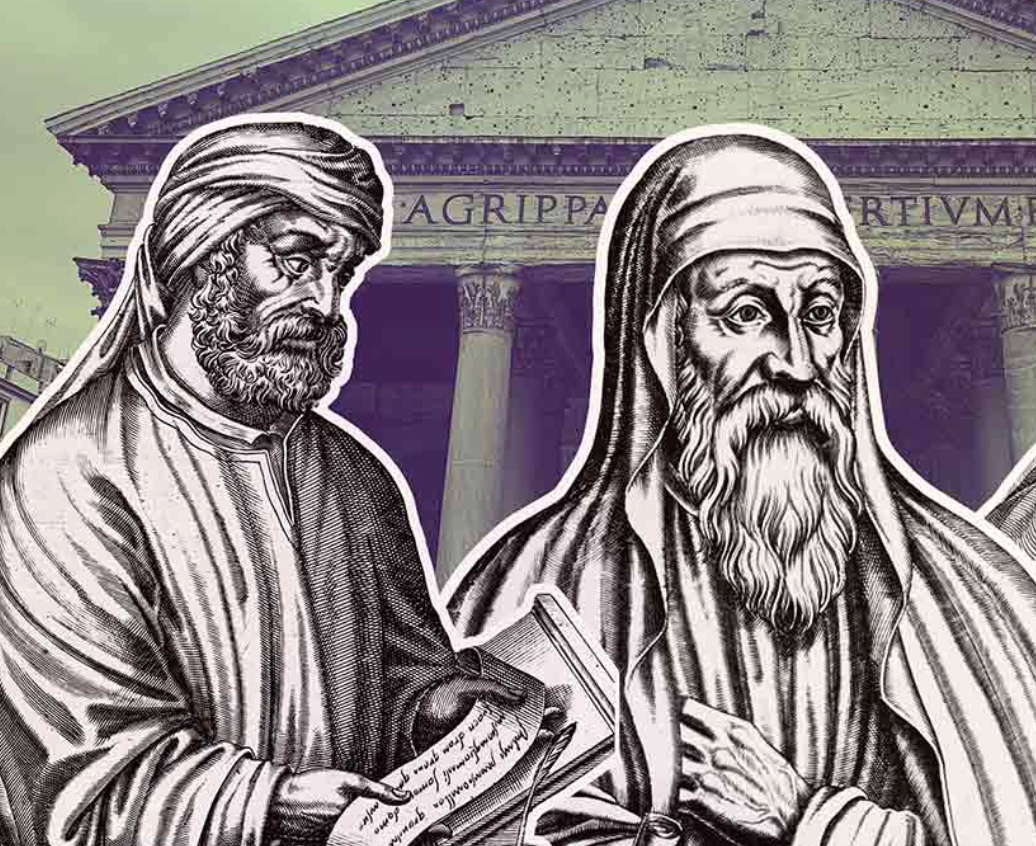
The final judgment belongs to God. Yet, we have examples of thousand upon thousands who ended up in deception, And few brilliant ones who could not see what IS.
Tertullian - brilliant, orthodox, and morally rigorous. He did not fall through vice but through prophetic absolutism, embracing Montanism’s claim to superior revelation beyond the Church. His imagination outran doctrine. Montanism was a movement that claimed new prophetic revelations of the Holy Spirit that demanded stricter moral rigor than the Church required. Montanism emphasized ecstatic prophecy, apocalyptic urgency, moral absolutism. Tertullian did not fall into moral shenanigans, he was sick and tired of the church’s laxity and formed his own following, finally becoming rigorous and extreme in his views on everyday life. We also have here brilliant Origen of Alexandria, whose immense intellect speculated beyond the limits of revelation. His error was not impiety but unrestrained imagination. Savonarola adds to the famous group, he began as a reformer and ended convinced that his visions were beyond correction.
The saints who endured were not those who had fewer visions, but those who refused to be ruled by them.
Difference Between Compunction and Scrupulosity
Compunction must not be confused with scrupulosity. Compunction is clear, proportionate, rational and reality-based: it names an actual disorder, calls for repentance, and then releases the soul into peace (sacramental confession might be needed). Scrupulosity is fear masquerading as conscience; it exaggerates or invents guilt, fixates endlessly on intention, and never permits rest or reflection. Compunction is a grace, scrupulosity is s restrain from mercy. Compunction sharpens reason and restores freedom, scrupulosity traps the heart in hellish perfectionism relying on continual self-investigation.
The danger today is that psychotherapy, when it treats moral judgment itself as pathology, can mislabel compunction as trauma and convince a person to distrust any interior resistance in the name of following intuition or personal needs. When therapy consistently reframes moral discomfort as repression, elevates desire above truth, the intellect is quietly disarmed and conscience flattened. The proper response is not to reject psychological help, but to retain Christian moral criteria: ask whether therapy restores clarity, responsibility, and freedom, or merely offers psychological relief without truth. A good Christian therapist will help to reduce anxiety while preserving moral agency; the other option is to anesthetize the conscience and call it healing, integration and freedom.
The Malines Documents: why experience must be governed

This is precisely why the Church insisted on discernment frameworks like the Malines Documents in case of Charismatic Renewal, prepared under cardinal Léon-Joseph Suenens. Far from glorifying experience, the Malines Documents repeatedly warn against excessive interiority and subjectivity. They insist that authentic movements of the Spirit:
produce conversion, not self-confirmation
deepen obedience to doctrinal Tradition
serve the common good of the Church, not personal certainty
Charisms, they emphasize, are not proof of maturity. Without charity, humility, and obedience, they become empty, or dangerous.
The Malines insight is blunt and timely: experience does not interpret itself. Doctrine forms the intellect so experience can be judged rather than enthroned. Doctrine is the gateway to contemplation, mystical and prophetic spheres, not the other way around.
“Rather, modern ethics, modern psychotherapy, and modern political ideologies all tend to produce not superhumans but pitiable slaves to the rationalizations generated by our distorted human desires.”
What happens when pop psychology absolves the intellect
Modern pop psychology often makes a fatal move: it releases the intellect from judging desires. Disordered desire is no longer evaluated, it is explained. Resistance is no longer conscience, it is trauma. Moral discomfort is no longer insight, it is repression. This is not healing, nor freedom. It is moral anesthesia that releases people into doing whatever they want. A person so formed may feel peaceful, empowered, and authentic while moving steadily away from reality. And, God forbid, you would call it demonic.
As Dr. Timothy G. Patitsas has repeatedly argued, much of modern psychology subtly redefines the goal of healing from alignment with reality to relief from discomfort. In doing so, it often treats moral judgment itself as harmful, replacing the language of truth and responsibility with therapeutic narratives of self-protection and emotional safety. Patitsas warns that this produces not integration but fragmentation: the person feels calmer while becoming less capable of discerning truth.
Why compunction protects freedom
Compunction does not crush the soul. It keeps it permeable to truth. It allows the intellect to remain judge rather than servant of desire. It disciplines imagination so contemplation is real, not fabricated. It keeps prophecy sober and freedom ordered.
The saints did not fear compunction. They feared certainty without it. A conscience that can still ache is not damaged. It is still alive.